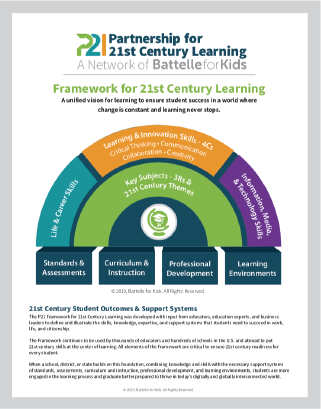
Framework for 21st Century Learning
P21’s Frameworks for 21st Century Learning were developed with input from teachers, education experts, and business leaders to define and illustrate the skills and knowledge students need to succeed in work and life, as well as the support systems necessary for 21st century learning outcomes. They have been used by thousands of educators and hundreds of schools in the U.S. and abroad to put 21st century skills at the center of learning.
Contact UsBattelle for Kids looks forward to engaging yet again with educators and other experts to update the Frameworks. We encourage personal use of these Frameworks by all who can benefit:
Permission for commercial use and/or distribution of these resources or other information produced must be made in writing to Battelle for Kids with a clearly defined request and description of how the material will be used. Permission will be granted provided that:
In addition, please note that:
Battelle for Kids will continue publishing frequently requested P21 materials and refreshing them for the benefit of the 21st century education movement and community. Please check back often for updates.
For additional information about the Partnership for 21st Century Learning and the available resources available, contact the Battelle for Kids team.
Contact Us Today© 2024, Battelle for Kids. All Rights Reserved. | Privacy Policy